
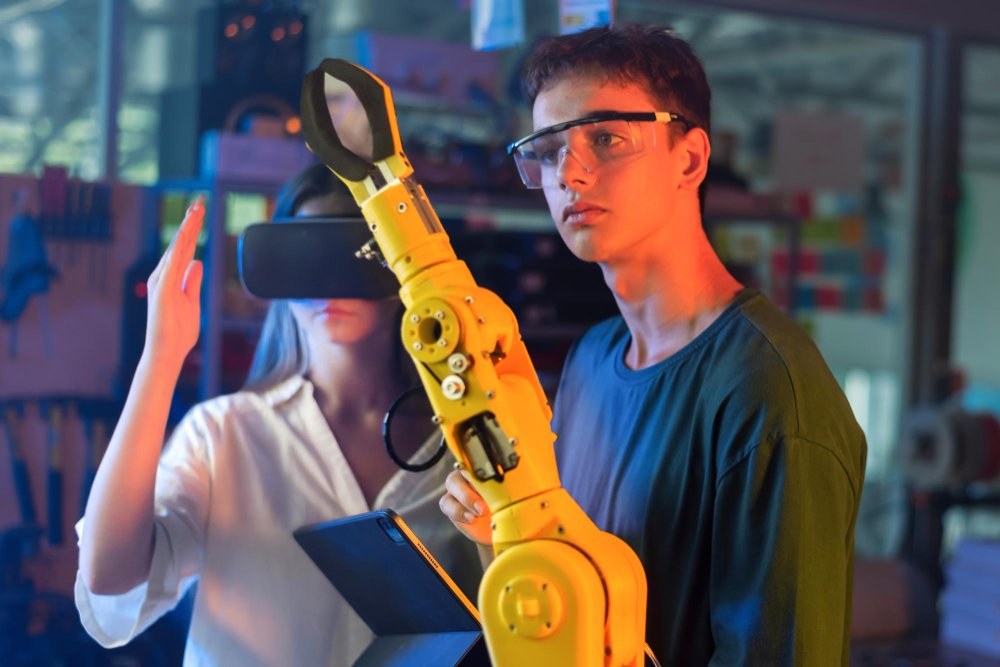
When I first started paying attention to artificial intelligence, I didn’t fully grasp how deeply it would transform the way we work, live, and interact. Over the past few years, AI has moved beyond simple automation, becoming a dynamic force that reshapes industries in ways that feel both exciting and, at times, unsettling. In this personal account, I want to share my perspective on how AI is influencing different sectors and what this could mean for our collective future.
Healthcare
The first industry that really caught my attention is healthcare. AI is no longer limited to analyzing medical data—it’s actively assisting doctors in diagnosing conditions with remarkable speed and accuracy. From predictive analytics that forecast disease outbreaks to AI-powered imaging tools that detect anomalies earlier than ever before, the impact on patient care is undeniable. I’ve personally observed hospitals adopting intelligent chatbots to streamline patient inquiries, reducing wait times and improving overall efficiency.
Finance
AI in finance is fascinating because it’s about making sense of enormous volumes of data. Algorithms can now predict market trends, identify potential risks, and even optimize investment strategies. From my experience, banks and investment firms using AI have seen improved fraud detection and personalized customer services. It’s a space where precision and speed matter, and AI seems to deliver on both fronts consistently.
Manufacturing and Supply Chain
One of the areas I find truly transformative is manufacturing and supply chain management. AI is not just enhancing automation; it’s creating smart factories where machines communicate with each other, adjusting operations in real-time. Companies are using AI to predict maintenance needs, minimize downtime, and optimize logistics. Observing a facility leveraging AI-driven robotics, I was impressed by how production efficiency could soar without compromising safety standards.
Retail and E-commerce
In retail, AI is quietly but powerfully changing the customer experience. From personalized recommendations to inventory management, AI enables businesses to anticipate consumer preferences more accurately. One interesting thing I’ve noticed is how chatbots and virtual assistants handle inquiries with a human-like touch, allowing retailers to scale their customer service effortlessly.
Education
Education is another sector where AI’s potential excites me. Adaptive learning platforms, powered by AI, are reshaping classrooms by providing customized learning paths for students. I’ve seen tools that analyze student performance in real-time and adjust the curriculum to optimize understanding. This isn’t just about efficiency—it’s about making learning more accessible and personalized.
Transportation and Mobility
AI is redefining transportation as well. Autonomous vehicles, traffic management systems, and predictive maintenance are all areas benefiting from AI integration. During a ride in a self-driving car prototype, I noticed how AI algorithms continuously adapt to environmental changes, making the journey smoother and safer. The potential for reduced accidents and improved traffic flow is immense.
Energy and Sustainability
Sustainability has become a critical focus, and AI is stepping up to help industries reduce environmental impact. Smart grids, AI-driven energy consumption analytics, and predictive maintenance for renewable energy equipment are some applications that stood out to me. It’s fascinating to see AI enabling more efficient energy usage while supporting sustainability goals.
Final Thoughts
From my personal perspective, the future applications of AI across industries are both inspiring and challenging. While concerns about job displacement and ethical implications exist, the benefits in efficiency, personalization, and innovation are difficult to ignore. As someone who observes these trends closely, I feel that embracing AI thoughtfully can help industries not only grow but also deliver better experiences for employees and consumers alike.
AI Disclaimer: This content was generated with assistance from artificial intelligence. While I have reviewed and edited the material for accuracy and readability, it should not be considered professional or financial advice.