
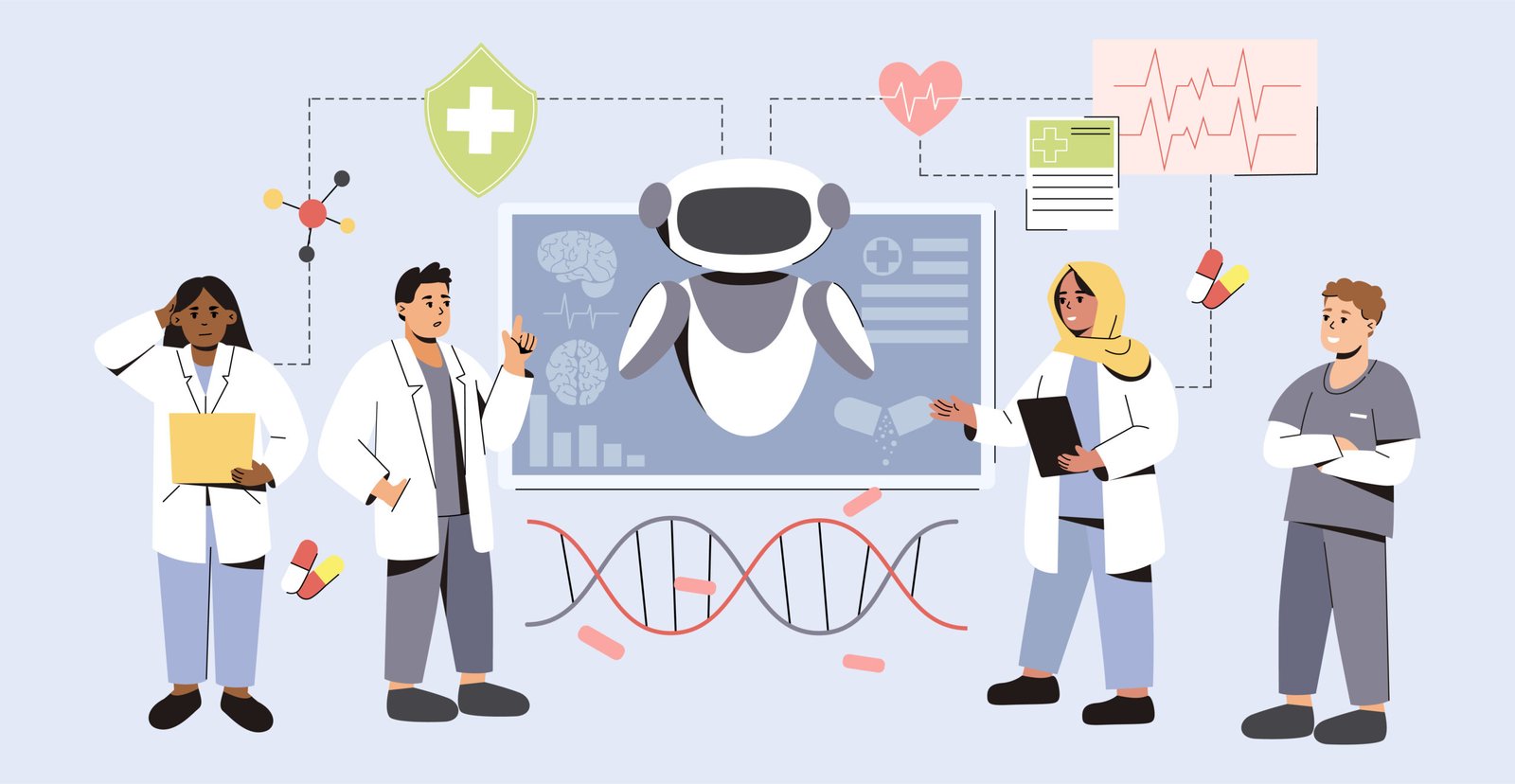
When I first started noticing how technology was entering hospitals and clinics, it felt like a quiet shift happening in the background. Not loud, not dramatic, but steady. Over time, it became clear that AI in healthcare and medicine is not just a future idea anymore—it is already part of daily medical work in many places.
From what I have observed and read through different real-world applications, AI is not replacing doctors. Instead, it is acting more like a support system that helps with speed, accuracy, and decision-making.
AI in medical diagnosis feels like a second opinion
One of the most impactful uses of AI is in diagnosis. In many hospitals, AI systems are trained to look at medical images like X-rays, CT scans, and MRIs.
What stands out to me is how AI can highlight patterns that may be hard for the human eye to catch, especially in early stages of disease.
For example, AI-based imaging tools can help detect:
- Early signs of cancer
- Lung infections
- Brain abnormalities
- Heart-related conditions
Doctors still make the final decision, but AI acts like a fast scanner that flags possible concerns. This reduces the chances of missing something important during busy hospital hours.
AI in treatment planning is becoming more personalized
Another area where AI is growing fast is treatment planning. Instead of using a one-size-fits-all approach, AI systems analyze patient history, lab results, genetics, and lifestyle data.
This helps doctors design more personalized treatment options.
What I find interesting is how predictive healthcare models can estimate how a patient might respond to a certain treatment before it is even started.
This can help in:
- Choosing better medication options
- Reducing side effects
- Improving recovery time
It feels like medicine is slowly moving from general rules to more individual-focused care.
AI in hospital management reduces pressure on staff
Outside of direct patient care, AI is also helping hospitals run more smoothly.
Many hospitals deal with heavy workloads, long queues, and limited staff. AI tools help organize these systems better.
Some common uses include:
- Managing patient appointments
- Predicting hospital bed availability
- Automating billing and records
- Reducing waiting times
From a practical point of view, this may not sound very medical, but it actually makes a big difference in how patients experience healthcare services.
When systems run smoothly, doctors and nurses get more time to focus on patients instead of paperwork.
AI in drug discovery speeds up research
Developing new medicines used to take many years. What AI is doing here is reducing the time needed to test and analyze chemical compounds.
Instead of manually testing thousands of combinations, AI can simulate and predict which compounds are most likely to work.
This has made drug discovery processes faster and more cost-efficient.
It is especially useful in situations where quick response is needed, such as outbreaks or new diseases.
AI in patient monitoring supports continuous care
One of the more practical uses of AI is remote patient monitoring. Wearable devices and smart health apps collect real-time data such as heart rate, oxygen levels, and sleep patterns.
AI analyzes this data and can alert doctors or patients when something unusual happens.
This is especially useful for:
- Chronic disease patients
- Elderly care
- Post-surgery recovery
It feels like healthcare is slowly moving outside hospitals and into everyday life.
AI chat systems help with basic medical guidance
Some healthcare systems now use AI chat tools to answer basic medical questions or guide patients on what to do next.
These systems are not meant to replace doctors but to reduce unnecessary hospital visits.
For example, they can help users decide:
- Whether symptoms need urgent care
- Which specialist to consult
- Basic first-aid guidance
From my perspective, this is helpful but also needs careful use because medical conditions can be complex.
Challenges I have noticed with AI in healthcare
Even though the progress is impressive, there are still real concerns.
One major issue is data privacy and security. Medical data is very sensitive, and protecting it is critical.
Another challenge is accuracy and bias. If AI systems are trained on incomplete or unbalanced data, their recommendations may not always be reliable for everyone.
Also, there is still a need for human judgment. Medicine is not just data—it also involves experience, intuition, and understanding of individual patients.
My overall impression
From everything I have seen and learned, AI in healthcare and medicine feels like a strong support tool rather than a replacement for doctors.
It is improving:
- Speed of diagnosis
- Quality of treatment planning
- Hospital efficiency
- Access to basic medical support
But it still depends heavily on human supervision.
The best results seem to come when AI and medical professionals work together instead of separately.
AI Disclaimer: This content is based on general research and personal observation-style interpretation. It is not medical advice. AI in healthcare systems may vary depending on country, hospital, and technology provider. Always consult qualified healthcare professionals for medical decisions.