
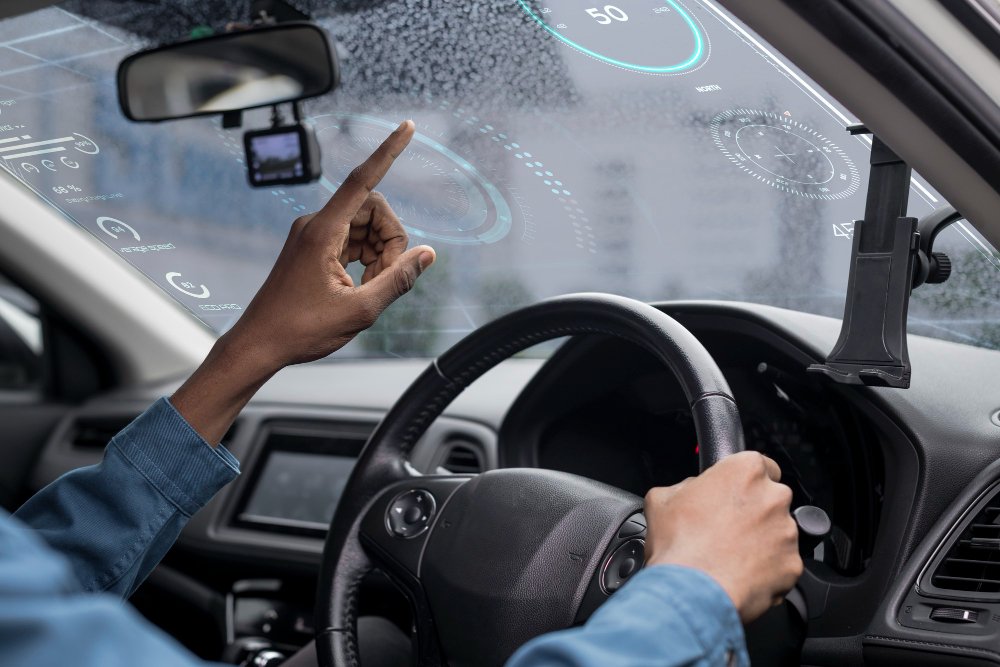
For decades, autonomous vehicles existed mainly in science fiction. Today, they are being tested on public roads, transporting passengers, delivering goods, and assisting drivers with increasingly advanced capabilities. While electric motors, sensors, and artificial intelligence often receive much of the attention, one technology quietly serves as the visual foundation of modern autonomous driving: computer vision.
A human driver constantly watches the road, checks mirrors, notices traffic lights, predicts the movement of pedestrians, and reacts to changing conditions within seconds. Self-driving cars must perform similar tasks without relying on human eyesight. Instead of eyes and a brain, they use cameras, high-performance processors, and sophisticated computer vision systems that analyze every scene in front of them.
Computer vision gives autonomous vehicles the ability to interpret visual information, identify important objects, estimate distances, monitor traffic behavior, and make safe driving decisions in real time.
Giving Vehicles the Ability to See
At its core, computer vision allows machines to interpret images and video in ways that support intelligent decision-making. A self-driving vehicle is equipped with multiple cameras positioned around the car to provide a nearly complete view of its surroundings.
These cameras continuously capture thousands of images every minute. The raw visual data alone has little value until powerful algorithms process every frame almost instantly.
The system identifies lanes, road markings, vehicles, cyclists, pedestrians, construction zones, traffic signals, speed limit signs, road edges, parked cars, and temporary obstacles. Every object is classified so the vehicle knows what it is looking at and how important it may become during the next few seconds.
Instead of simply recording video like a dashboard camera, computer vision transforms visual information into meaningful driving intelligence.
Object Recognition Happens Continuously
One of the most demanding responsibilities of computer vision involves object recognition.
Road environments change every second. Cars merge into traffic, pedestrians step off sidewalks, bicycles appear from blind spots, and animals may suddenly cross the road.
Computer vision models have been trained using enormous collections of driving images gathered under countless conditions. These systems learn to recognize objects from different angles, sizes, lighting conditions, weather situations, and movement patterns.
For example, a pedestrian partially hidden behind a parked van still needs to be identified before stepping into traffic. Likewise, a motorcycle approaching quickly from behind should not be mistaken for a bicycle.
Rapid and reliable recognition allows the autonomous system to prepare appropriate responses before situations become dangerous.
Lane Detection Keeps the Vehicle on Course
Remaining inside the correct lane may appear simple for experienced drivers, yet it represents one of the most critical responsibilities for an autonomous vehicle.
Computer vision constantly scans painted lane markings, temporary construction lines, road edges, and directional arrows.
The software predicts the lane’s path even when markings become faded or partially covered. It also detects lane splits, merging highways, exits, and intersections.
Rather than reacting only to visible paint, advanced systems estimate where lanes continue based on previous visual information and surrounding road geometry.
This continuous analysis helps maintain smooth steering instead of sudden corrections.
Reading Traffic Signs and Signals
Road signs provide valuable instructions that constantly change throughout a journey.
Speed limits, school zones, stop signs, yield signs, warning signs, one-way streets, and temporary construction notices all influence driving behavior.
Computer vision scans each sign, classifies its category, reads numerical values when necessary, and applies the appropriate driving rule.
Traffic lights introduce another level of complexity.
The system must accurately determine whether the signal is red, yellow, or green while distinguishing active lights from nearby reflections or unrelated light sources.
Even slight mistakes could create dangerous situations, making accuracy extremely important.
Detecting Pedestrians and Cyclists
People move far less predictably than vehicles.
Pedestrians may suddenly cross outside designated crossings. Children can run into streets without warning. Cyclists often change direction quickly while sharing limited road space.
Computer vision estimates not only where people currently stand but also where they are likely to move next.
By monitoring body movement, walking direction, speed, and nearby surroundings, autonomous systems estimate future positions and adjust vehicle speed accordingly.
This predictive capability significantly improves safety in busy urban environments.
Working Alongside Other Sensors
Although computer vision plays a central role, autonomous vehicles rarely depend on cameras alone.
Many combine camera data with radar, ultrasonic sensors, GPS information, and, in some cases, LiDAR technology.
Each sensor contributes different strengths.
Cameras capture colors, traffic lights, lane markings, and road signs.
Radar performs well when measuring vehicle speed and distance, particularly during poor weather.
LiDAR generates detailed three-dimensional maps of surrounding objects.
Computer vision acts as one of the primary sources of environmental information while sensor fusion combines multiple data streams into a more reliable picture of the road.
This collaborative approach improves overall accuracy and reduces the chance of errors caused by relying on a single source of information.
Artificial Intelligence Improves Visual Performance
Modern computer vision depends heavily on deep learning.
Instead of programmers writing fixed instructions for every possible road scenario, neural networks learn patterns from enormous training datasets.
Millions of labeled images teach these systems how roads, vehicles, pedestrians, traffic signs, animals, weather conditions, and unexpected hazards appear in real-world environments.
As additional driving data becomes available, engineers continue refining these models.
New software versions often improve object recognition, reduce false detections, and increase reliability without requiring major hardware changes.
This ability to improve over time makes computer vision increasingly capable as autonomous driving technology evolves.
Handling Difficult Weather and Lighting
Driving conditions rarely remain ideal.
Rain, heavy fog, snow, glare from sunlight, nighttime darkness, and wet roads all create visual challenges.
Computer vision systems are trained using diverse environmental conditions so they can continue identifying essential objects despite reduced visibility.
Advanced image processing techniques adjust brightness, improve contrast, reduce noise, and compensate for changing lighting conditions.
Even so, severe weather remains one of the greatest technical challenges for fully autonomous vehicles.
Engineers continue developing better algorithms capable of maintaining reliable performance across every driving environment.
Predicting the Behavior of Other Drivers
Safe driving requires more than identifying nearby vehicles.
An autonomous system must estimate what those vehicles are likely to do next.
Computer vision monitors steering angles, vehicle speed, lane position, braking behavior, turn signals, and traffic flow.
If a nearby vehicle begins drifting toward another lane without signaling, the autonomous system can prepare for a possible lane change.
Similarly, it can recognize slowing traffic ahead before sudden braking becomes necessary.
These predictive capabilities create smoother driving while reducing accident risks.
Real-Time Processing Is Essential
A self-driving car cannot spend several seconds analyzing a single camera frame.
Every driving decision must happen almost instantly.
Powerful onboard computers process enormous amounts of visual information every second while continuously updating driving plans.
This includes recognizing new objects, tracking existing ones, calculating distances, predicting movement, and selecting safe responses.
Even small delays could affect braking distances or steering decisions.
For this reason, processing speed remains just as important as recognition accuracy.
Training Through Billions of Driving Scenarios
Before operating on public roads, autonomous driving systems undergo extensive testing.
Developers collect driving footage from cities, highways, rural roads, tunnels, parking lots, and construction zones.
Simulation environments generate countless additional situations that would be difficult or unsafe to recreate in real traffic.
These virtual environments expose computer vision systems to unusual events such as fallen trees, emergency vehicles, unexpected road closures, unusual weather, or objects blocking traffic.
Repeated exposure strengthens system performance before deployment.
Current Limitations
Despite impressive progress, computer vision still faces important challenges.
Temporary road markings, damaged signs, heavy snowfall, complex intersections, unusual vehicles, and unpredictable human behavior can complicate visual interpretation.
Construction sites frequently introduce new lane layouts that differ from digital maps.
Bright sunlight can create reflections that interfere with camera images.
Emergency situations involving multiple moving objects require exceptionally fast decision-making.
Because of these challenges, many autonomous vehicles continue operating with safety drivers or controlled deployment areas while engineers refine system performance.
The Future of Computer Vision in Transportation
Computer vision continues advancing at an impressive pace.
Higher-resolution cameras, faster processors, improved neural networks, and more sophisticated sensor integration are expanding what autonomous vehicles can accomplish.
Future systems will likely become even better at predicting traffic behavior, reacting to unusual road conditions, and operating safely across a wider range of environments.
Beyond fully autonomous cars, these improvements are already enhancing driver-assistance technologies found in everyday vehicles, including automatic emergency braking, lane-keeping assistance, adaptive cruise control, traffic sign recognition, and collision avoidance.
As computer vision continues evolving, transportation will become increasingly intelligent, efficient, and safety-focused.
Final Thoughts
Computer vision serves as one of the most important building blocks behind autonomous driving. By transforming camera images into meaningful driving information, it enables vehicles to recognize roads, monitor traffic, identify hazards, interpret road signs, and respond to constantly changing situations within fractions of a second.
Although fully autonomous transportation continues to evolve, the progress achieved so far demonstrates how rapidly this field is advancing. Continued improvements in artificial intelligence, processing power, and visual analysis will further strengthen the reliability of self-driving systems, bringing the automotive industry closer to safer, smarter, and more capable transportation for people around the world.